
Introduction
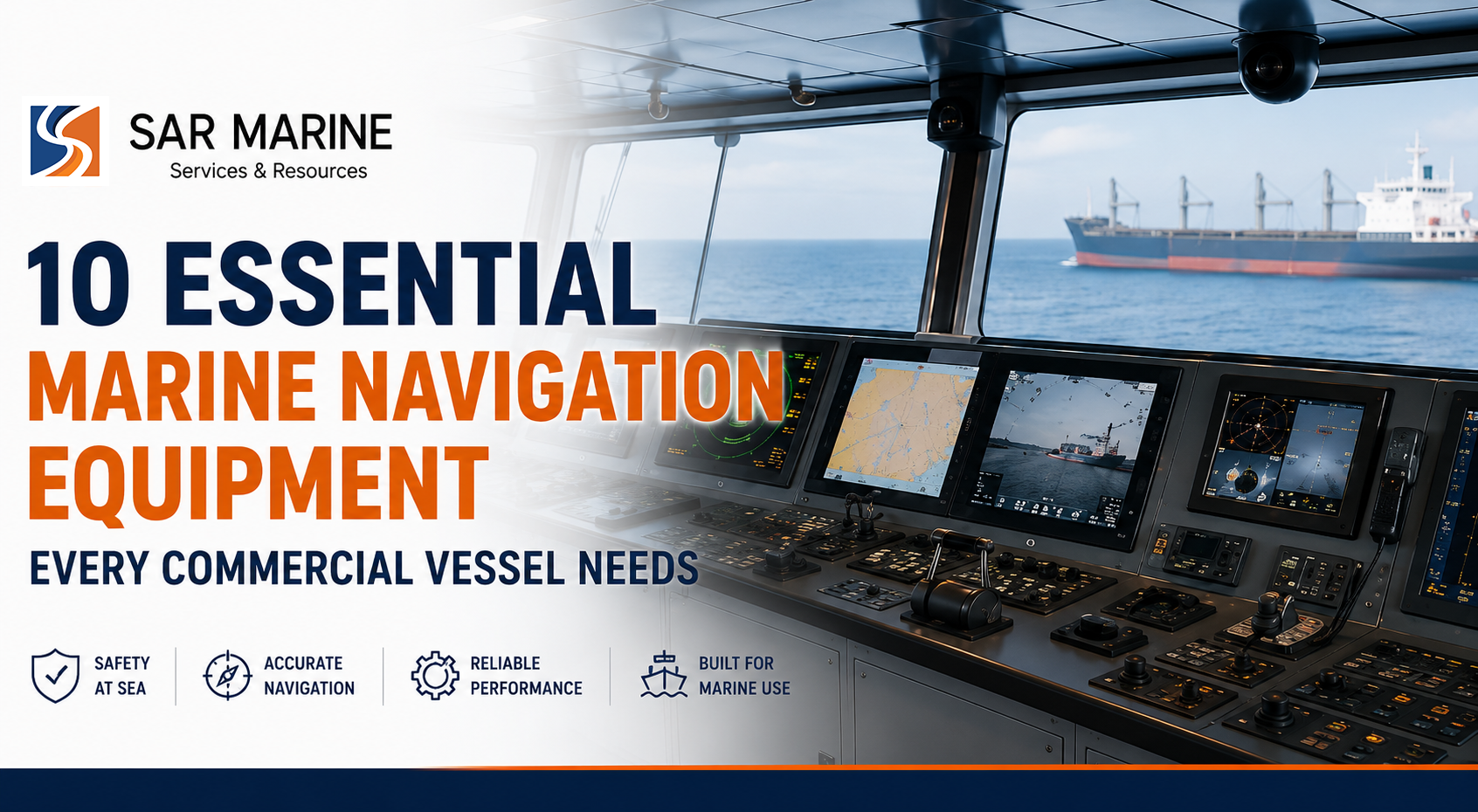
Safe navigation is one of the most important aspects of vessel operations. Modern commercial ships rely on a range of navigation systems to determine position, avoid collisions, monitor surrounding traffic, and comply with international maritime regulations.
Whether operating a cargo vessel, tanker, offshore support vessel, fishing vessel, or workboat, having reliable marine navigation equipment is critical for safety and operational efficiency.
This guide covers ten essential navigation systems commonly found on commercial vessels and explains their importance.
1. Marine Radar
Marine radar helps detect nearby vessels, coastlines, buoys, and obstacles, especially during poor visibility conditions such as fog, rain, or darkness.
Benefits:
Collision avoidance
Navigation assistance
Situational awareness
Safe operation in low visibility
Radar remains one of the most important pieces of bridge equipment on any vessel.
2. GPS Navigator
A Global Positioning System (GPS) navigator provides accurate vessel positioning using satellite signals.
Functions include:
Position tracking
Route planning
Speed monitoring
Waypoint navigation
GPS technology is essential for modern marine operations.
3. Electronic Chart Display and Information System (ECDIS)
ECDIS replaces traditional paper charts with digital navigation charts.
Advantages:
Real-time vessel position display
Route monitoring
Enhanced navigation safety
Improved voyage planning
Many commercial vessels now rely on ECDIS as a primary navigation tool.
4. Automatic Identification System (AIS)
AIS allows vessels to exchange navigation data electronically.
Information shared includes:
Vessel identity
Position
Course
Speed
AIS significantly improves maritime traffic awareness and collision avoidance.
5. Gyro Compass
Unlike magnetic compasses, gyro compasses determine true north.
Benefits:
Accurate heading information
Improved navigation precision
Integration with autopilot and radar systems
Gyro compasses remain a standard component on commercial vessels.
6. Autopilot System
Autopilot systems automatically maintain a vessel's course.
Advantages:
Reduced steering workload
Improved fuel efficiency
More consistent navigation
Modern autopilot systems often integrate with GPS and gyro compass data.
7. Echo Sounder
An echo sounder measures water depth beneath the vessel.
Applications:
Safe navigation in shallow waters
Port operations
Coastal navigation
Depth information is essential for preventing groundings.
8. Speed Log
Speed logs measure vessel speed through water.
This information supports:
Voyage planning
Fuel efficiency monitoring
Navigation calculations
Speed data is frequently integrated into bridge navigation systems.
9. VHF Communication System
Very High Frequency (VHF) radios provide communication between vessels and shore stations.
Uses include:
Safety communications
Port coordination
Emergency contact
Traffic management
Reliable communication equipment is essential for vessel operations.
10. Navigation Lights and Signaling Equipment
Navigation lights allow vessels to be identified during nighttime and restricted visibility conditions.
These systems help:
Prevent collisions
Meet regulatory requirements
Improve vessel visibility
Proper maintenance of navigation lights is critical for maritime safety.
Importance of Regular Maintenance
Even the most advanced navigation equipment requires regular inspection and maintenance.
Recommended practices:
Functional testing
Software updates
Calibration checks
Component replacement when required
Routine maintenance helps reduce unexpected failures and costly downtime.
Choosing Reliable Replacement Equipment
When replacing marine navigation equipment, vessel operators should consider:
Compatibility with existing systems
Equipment condition
Availability of spare parts
Supplier experience
Testing procedures
Professionally tested and inspected equipment can provide a reliable and cost-effective solution.
Why Marine Buyers Choose SAR MARINE
SAR MARINE supplies tested and reconditioned marine navigation equipment, automation systems, and marine spare parts to customers worldwide.
Our inventory includes products from leading manufacturers and covers a wide range of vessel applications.
We help ship owners, marine engineers, and procurement teams source reliable marine equipment for maintenance, upgrades, and replacement projects.
Frequently Asked Questions
Which navigation equipment is most important on a vessel?
Radar, GPS, ECDIS, AIS, and VHF communication systems are among the most critical navigation systems used on commercial vessels.
How often should navigation equipment be inspected?
Inspection schedules vary by equipment type and vessel requirements, but regular testing and maintenance are recommended.
Can older navigation equipment still be replaced?
Yes. Many discontinued marine navigation systems can still be sourced through specialized suppliers of tested and reconditioned marine equipment.
Conclusion
Modern commercial vessels depend on multiple navigation systems working together to ensure safe and efficient operations.
Understanding the role of each navigation system helps vessel operators make informed maintenance and procurement decisions.
If you are looking for marine navigation equipment, replacement units, or hard-to-find marine spare parts, SAR MARINE can assist with sourcing tested equipment for your vessel requirements.