
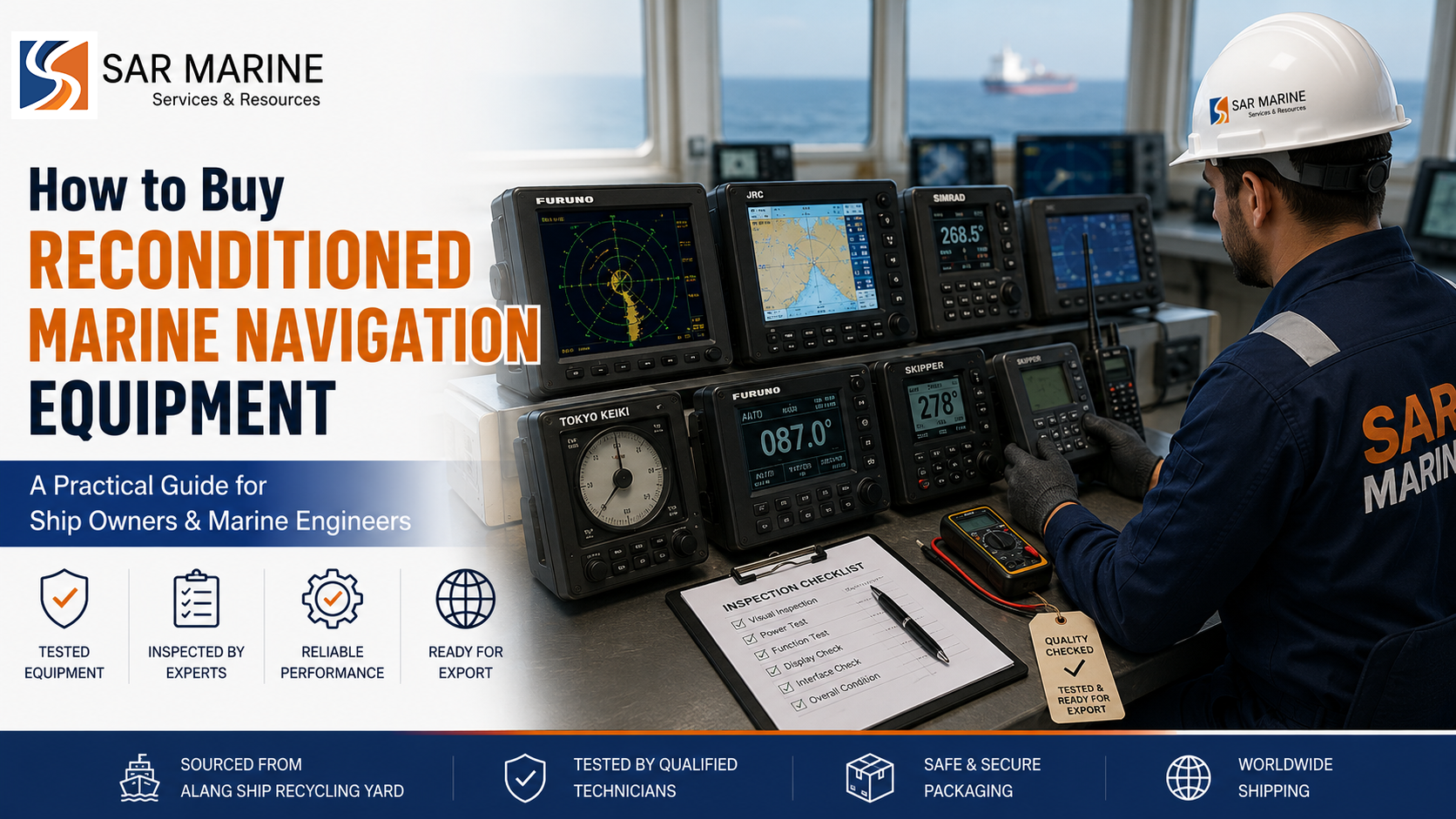
Introduction
Marine navigation equipment plays a critical role in vessel safety, operational efficiency, and regulatory compliance. However, replacing navigation systems with brand-new equipment can be expensive, especially for vessel operators managing maintenance budgets.
As a result, many ship owners, marine engineers, and procurement teams choose reconditioned marine navigation equipment as a cost-effective alternative. When sourced from a reliable supplier, reconditioned equipment can provide dependable performance while significantly reducing costs.
This guide explains what to look for when purchasing reconditioned marine navigation equipment and how to avoid common mistakes.
What Is Reconditioned Marine Navigation Equipment?
Reconditioned marine equipment refers to previously used equipment that has been professionally inspected, cleaned, tested, and restored to operational condition.
Common examples include:
Marine Radar Systems
GPS Navigators
ECDIS Equipment
Gyro Compasses
Autopilot Systems
Echo Sounders
AIS Equipment
VHF Communication Systems
Unlike untested second-hand equipment, professionally reconditioned units undergo functional testing before being offered for sale.
Benefits of Reconditioned Marine Equipment
Cost Savings
One of the primary reasons vessel operators choose reconditioned equipment is cost efficiency. Reconditioned units can often be sourced at a fraction of the cost of new equipment.
Availability
Many older vessel systems require replacement units that are no longer manufactured. Reconditioned equipment helps extend the operational life of existing onboard systems.
Faster Procurement
New equipment may involve lengthy manufacturing and delivery lead times. Reconditioned units are often available for immediate shipment.
Sustainable Choice
Reusing marine equipment reduces waste and supports sustainable marine operations by extending the life cycle of valuable electronic systems.
Key Factors to Consider Before Purchasing
Verify Equipment Condition
Request detailed information about:
Functional testing procedures
Operational status
Cosmetic condition
Photographs of the actual unit
A reliable supplier should be able to explain how the equipment was inspected and tested.
Check Model Compatibility
Always verify:
Model Number
Part Number
Power Requirements
Vessel Compatibility
Even equipment from the same manufacturer may have multiple versions with different specifications.
Review Documentation
Ask whether the supplier can provide:
Testing reports
Product photographs
Export documentation
Identification labels
Proper documentation simplifies procurement and installation planning.
Evaluate Supplier Experience
Choose suppliers with proven experience in marine electronics and spare parts.
Consider:
Industry experience
Product inventory
Technical knowledge
Export capabilities
Common Mistakes to Avoid
Buying Based Only on Price
The lowest-priced equipment is not always the best value. Equipment condition, testing, and supplier reliability are equally important.
Ignoring Model Numbers
Small differences in model numbers can lead to compatibility issues and unnecessary delays.
Not Requesting Actual Product Photos
Always review photographs of the actual equipment whenever possible.
Purchasing Untested Equipment
Untested equipment introduces unnecessary risk and may result in additional repair costs.
Why Testing Matters
Before dispatch, marine navigation equipment should undergo functional inspection and testing to verify operational condition.
Testing may include:
Power-up verification
Display functionality checks
Button and control testing
Communication interface verification
General operational assessment
Proper testing helps reduce installation issues and improves confidence in the purchased equipment.
Why Marine Buyers Choose SAR MARINE
SAR MARINE specializes in supplying tested and reconditioned marine spare parts and equipment for vessels worldwide.
Our inventory includes:
Marine Navigation Equipment
Marine Automation Systems
Industrial Control Equipment
Marine Lighting Solutions
Offshore and Rig Equipment
Every unit is carefully inspected before dispatch, and export documentation support is available for international buyers.
Frequently Asked Questions
Is reconditioned marine equipment reliable?
When sourced from a reputable supplier and properly tested, reconditioned marine equipment can provide dependable performance for many marine applications.
Can I find discontinued marine equipment?
Yes. Reconditioned equipment is often the best solution for replacing discontinued marine systems and spare parts.
What information should I provide when requesting a quotation?
Provide:
Equipment Name
Manufacturer
Model Number
Part Number (if available)
Quantity Required
This helps suppliers identify the correct equipment quickly.
Conclusion
Reconditioned marine navigation equipment offers a practical and cost-effective solution for vessel operators seeking reliable replacements without the expense of purchasing new systems.
By verifying equipment condition, confirming compatibility, and working with experienced suppliers, buyers can reduce costs while maintaining operational reliability.
If you are looking for tested marine navigation equipment, automation systems, or marine spare parts, contact SAR MARINE with your equipment requirements and model numbers for assistance.